This page is the working core of the studio: six block structures with starting pictures, the changes we write in, week-by-week focus, and the metric bands we plan toward. Read them as protocols, not as promises.
Case profiles below are composite illustrations of how our twelve-week blocks are structured and what ranges we plan for. They are not testimonials and do not represent named clients.
Profile
Desk-bound strength reset
Assessment session: history, schedule audit and the first pass of the baseline sheet.
Starting picture
Age band 34–42. Seated work for most of the day, often with a late finish. Training frequency is zero to one session a week, usually a short walk or an abandoned gym plan. Low-back discomfort shows up after long sits and eases with movement. Sleep is adequate on paper and irregular in practice. The person can pick up a suitcase and climb stairs, and has not completed a supervised strength programme. The block is built to restore two weekly sessions, a usable squat and hinge, and a walking volume that survives the office week.
What we changed
Frequency first: two 55-minute sessions, booked, rather than an open four-day hope.
Squat pattern from a box or a high goblet position until depth is repeatable without the low back taking over.
Hinge taught as a hip-first pattern with a dowel, then a kettlebell, before any deadlift numbers are chased.
Rowing used as the conditioning slot so impact stays low while work capacity returns.
A daily step floor, logged on the same device used at assessment, because sitting time is the actual constraint.
Block structure
Weeks
Focus
Sessions / week
Key lift or test
1
Baseline, range, session shape
2
Goblet squat pattern
2–5
Load on squat and hinge, step floor
2
Goblet squat 8RM
6
Re-test and rebuild
2
Full baseline battery
7–9
Second progression, add carry
2
Suitcase carry 40 m
10
Deload
2
Technique, lighter 8RM
11–12
Peak week and exit tests
2
2 km row, hang, girths
Planned outcome table
Metric
Week 0
Week 6
Week 12 (planned band)
Goblet squat 8RM
12–16 kg
20–24 kg
24–32 kg
Dead-hang
8–15 s
18–28 s
25–40 s
2 km row time
10:20–11:10
9:50–10:30
9:20–10:00
Resting HR
70–78 bpm
66–74 bpm
62–70 bpm
Waist
baseline cm
−1 to −2 cm
−2 to −4 cm
Waking step count
3,000–5,000
6,000–8,000
7,000–9,000
What usually goes wrong
Late finishes delete the evening session. We move that slot to 06:30 for the remainder of the block instead of stacking guilt onto Thursday. A travel week is rewritten as two hotel-room sessions plus the step floor; the original tests wait until the person is back on the floor. If the low back flares after a long sit, we shorten range for a week and keep frequency. We do not wipe the block and start at week 1.
Honest limits
This block does not treat a disc injury or replace a physiotherapy plan. It will not produce a competition squat. Body-weight change is not the primary metric; if scale weight is the only number you care about, we will say so at assessment and may decline the block.
Profile
Return to running after a long gap
Starting picture
Age band 30–38. Ran club 10 km times in the past, then stopped for about four years. Current continuous run is eight to twelve minutes before the calves or the breathing shut it down. Strength work is sparse. The stated aim is 10 km without stopping. We do not start with mileage. The first filter is a single-leg calf-raise test, a hop-and-stick, and a trap-bar hinge that shows the posterior chain can take repeated loading. Only then do run minutes go into the week.
What we changed
Two strength sessions remain the spine of the week; run minutes are the third exposure, not the first.
Calf and foot work is dated and counted, because that is where the gap usually shows.
Run sessions are time-capped and walked in intervals until the continuous band is earned.
Trap-bar deadlift is the hinge of record, easier to repeat than a conventional pull after a long layoff.
Resting heart rate is logged three mornings a week as a cheap check on whether run minutes were too ambitious.
Block structure
Weeks
Focus
Sessions / week
Key lift or test
1
Screen, calf volume, walk/run
3
Single-leg calf raise
2–5
Hinge strength, interval run
3
Trap-bar 5RM
6
Re-test; decide run progression
3
Continuous run, hop-and-stick
7–9
Extend continuous minutes
3
Time-on-feet
10
Deload, keep frequency
3
Easy run + light hinge
11–12
Longest continuous run, exit tests
3
10 km attempt or 40 min
Planned outcome table
Metric
Week 0
Week 6
Week 12 (planned band)
Continuous run
8–12 min
18–24 min
28–40 min
Single-leg calf raise
8–12 / side
15–20 / side
20–25 / side
Trap-bar deadlift 5RM
40–55 kg
60–72 kg
70–85 kg
Resting HR
68–76 bpm
64–72 bpm
60–68 bpm
Hop-and-stick (qual.)
unstable
controlled
repeatable
Sit-to-stand 30 s
16–20
20–24
22–26
What usually goes wrong
A good week tempts a long Sunday run that was not on the sheet. That is the typical calf niggle. We cap weekend minutes in writing. Travel with no pavement is rewritten as a rower or bike session at the same RPE. If the week-6 continuous run has not moved, we keep strength and delay the 10 km target rather than adding a fourth run day.
Honest limits
This block is not a race plan and does not include interval track work. A previous stress fracture, current Achilles pain, or a knee that has not been cleared by a doctor sits outside what we will load. We coach exercise; we do not diagnose or treat.
Profile
Postnatal strength rebuild
Strength test on the coaching floor, with loads recorded against the week-0 sheet.
Starting picture
Six or more months after birth, returning with written clearance from a doctor. The aim is supporting strength through the trunk and hips, a usable carry, and a steady-state slot that does not wreck the following night of sleep. Training history before pregnancy varies; we ignore it until the current screen is done. Sleep is fragmented. Sessions are booked around feeding and work, which usually means two visits a week, sometimes three. We coach exercise. We do not diagnose or treat pelvic-floor or abdominal wall conditions; those stay with the clinician who cleared the return.
What we changed
Breathing and brace cues on every main lift, recorded as a technique note rather than a lecture.
Carries before heavy axial loading, so we can see how the trunk behaves under a suitcase.
Push-ups from an incline until a floor position is repeatable without breath-holding.
Conditioning on a rower or bike, time-capped, because impact is added only when the screen allows.
A standing rule that a session is shortened, not cancelled, when the previous night was two hours of sleep.
Block structure
Weeks
Focus
Sessions / week
Key lift or test
1
Screen, carry, incline push
2
Suitcase carry 40 m
2–5
Squat to a box, hinge, carry load
2
Goblet squat 8RM
6
Re-test; add or withhold impact
2
Sit-to-stand, hang
7–9
Progress load, optional walk-run
2–3
Dead-hang
10
Deload
2
Technique week
11–12
Exit tests
2
Full battery
Planned outcome table
Metric
Week 0
Week 6
Week 12 (planned band)
Sit-to-stand 30 s
12–16
16–20
18–24
Suitcase carry 40 m
8–12 kg
12–16 kg
16–20 kg
Incline push-up
5–8
8–12
10–15
Dead-hang
5–12 s
12–22 s
20–35 s
Goblet squat 8RM
8–12 kg
14–18 kg
16–24 kg
Resting HR
64–74 bpm
62–70 bpm
58–68 bpm
What usually goes wrong
Illness in the household deletes a week. We slide the deload, keep two shorter sessions, and do not pretend the missed week never happened. If symptoms the clinician asked you to watch for return, we stop the offending pattern and wait for clearance again. The calendar stretches; the tests stay honest.
Honest limits
This is not postnatal physiotherapy and not a promise to restore a pre-pregnancy body-fat figure. We will not load a return that lacks medical clearance. Scale weight is a poor headline metric in this block; we say that at the first meeting.
Profile
Body composition block for shift workers
Starting picture
Irregular sleep, rotating nights, two sessions a week that can be kept, and a request to change composition while scale weight stays inside a narrow band. Appetite swings with the roster. Training history is mixed. The useful work here is repeatable sessions at a fixed RPE, protein regularity across odd meal times, and girths plus a composition estimate used as bands. We do not issue crash deficits. We coach exercise; we do not diagnose or treat, and we do not write clinical meal plans.
What we changed
Both sessions are strength-biased, because two hours a week of mixed circuits will not move composition in a planned way.
Loads are capped by RPE 7–8 so a night shift does not meet a heroic squat.
A third optional session exists only as a walk or an easy row, never as extra intensity.
Waist, hip and an agreed composition estimate are logged at week 0, 6 and 12, not on the bathroom scale every morning.
The eating note is limited to “protein at the first meal after a shift” and a regular window; no supplement list.
Block structure
Weeks
Focus
Sessions / week
Key lift or test
1
Baseline, RPE calibration
2
Goblet squat, row
2–5
Progression on 3:1, sleep log
2
Bench or push-up 8RM
6
Re-test girths and lifts
2
Waist, composition band
7–9
Rebuild if girths stall
2
Hinge 8RM
10
Deload after roster peak
2
Technique
11–12
Exit tests
2
Full battery
Planned outcome table
Metric
Week 0
Week 6
Week 12 (planned band)
Scale weight
held
±1.5 kg
±2 kg of week 0
Waist
baseline
−1 to −2 cm
−2 to −4 cm
Goblet squat 8RM
16–20 kg
22–28 kg
28–36 kg
2 km row time
9:40–10:30
9:20–10:00
9:00–9:40
Dead-hang
15–25 s
25–35 s
30–45 s
Resting HR (off-shift)
66–74 bpm
62–70 bpm
60–68 bpm
What usually goes wrong
A string of nights flattens the morning pulse and the bar speed. We drop load by a written percentage for seven days and keep the two sessions. We do not add extra conditioning to “make up” a week of poor sleep. If girths have not moved at week six while lifts have, we leave the training week alone and review the eating note; if both are flat, we change the lift selection.
Honest limits
This block is built to land composition change at a stable weight for this starting profile. It is not a contest cut and not medical treatment for metabolic disease. People seeking a large, fast drop in scale weight will be told the format does not do that.
Profile
Pre-hike conditioning
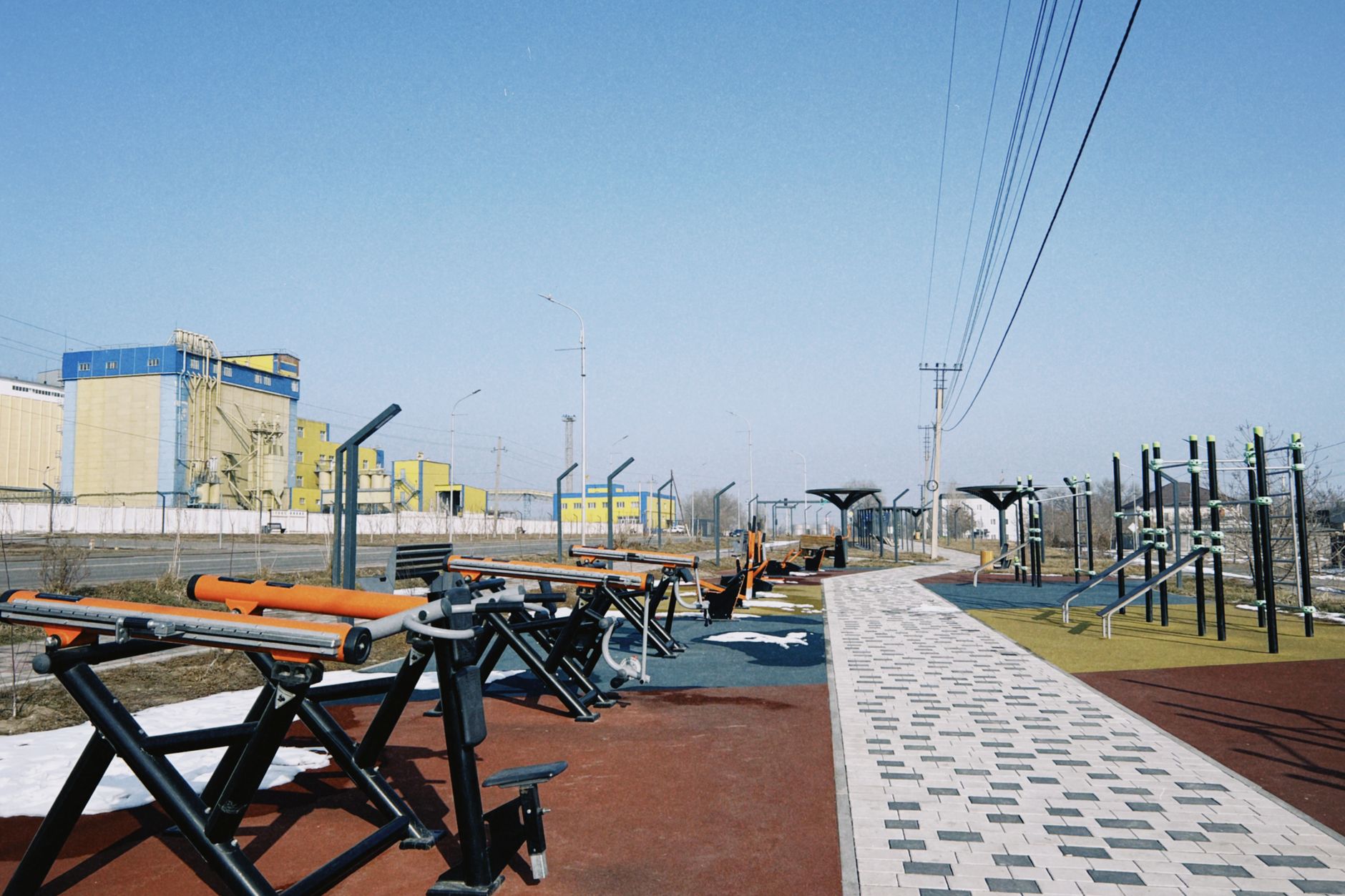
Conditioning stations used for packed walking practice and work-capacity sessions.
Starting picture
A multi-day trek is already booked. The person can walk on flat pavement for an hour and has little recent hill or pack work. Fourteen weeks are available, which is longer than our standard block; we still re-test at week six and week twelve, then use weeks 13–14 as a taper. The plan has to include a pack, because a strong squat in trainers does not automatically carry 8–12 kg up a grade. Two or three sessions a week in the studio, plus one longer walk outdoors, is the usual shape.
What we changed
Posterior-chain strength (hinge, step-up, calf) as the indoor spine.
Pack-loaded walks on a grade or a sled, progressing mass before distance.
A weekly long walk that starts without a pack and finishes with one.
Grip work, because bottle cages and pole carries show up on day three of a trek.
A heat and fluid note for Singapore training walks, kept practical and non-clinical.
Block structure
Weeks
Focus
Sessions / week
Key lift or test
1
Baseline walk, hinge, calves
3
Unloaded 45 min walk
2–5
Step-up load, short packed walks
3+walk
Trap-bar or step-up
6
Re-test; set pack mass
3+walk
Packed 40 min
7–9
Grade, pack, longer walk
3+walk
Sled or hill repeats
10–12
Longest packed session, then ease
3+walk
90–120 min packed
13–14
Taper
2
Short packed walks
Planned outcome table
Metric
Week 0
Week 6
Week 12 (planned band)
Packed walk (8–12 kg)
0–20 min
40–55 min
90–120 min
Step-up 8RM / side
bodyweight
8–12 kg
12–16 kg
Trap-bar deadlift 5RM
50–70 kg
75–90 kg
85–105 kg
Dead-hang
12–20 s
25–35 s
30–45 s
2 km row time
9:30–10:20
9:10–9:50
8:50–9:30
Single-leg calf raise
10–14 / side
16–20 / side
20–25 / side
What usually goes wrong
A weekend of over-long self-organised hikes, done on pride, produces a knee that then misses studio sessions. We write the long walk duration on the sheet and treat extra distance as a missed note, not extra credit. Work travel in weeks 8–9 is rebuilt as packed hotel-stair sessions plus a rower. The trek date does not move, so we cut volume rather than invent a fourth hard day.
Honest limits
We cannot simulate altitude, technical scrambling, or a 20 kg expedition load in this room. People with current knee, Achilles, or back pain train only with medical clearance. This block does not replace a guided trek briefing from the operator you booked.
Profile
Over-55 balance and bone-loading block
Starting picture
Age 55 and above, two sessions a week, aiming to keep balance tasks honest, load the skeleton through the long axis, and improve grip. Some people arrive after a clinician mentioned bone density; we still require medical clearance and we still do not treat. Others arrive because a trip, a grandchild, or a flight of stairs has made the current strength level obvious. Sessions are supervised. Unsupervised circuit hours are not part of this format.
What we changed
A sit-to-stand and a timed up-and-go as standing tests, repeated at the same chair height.
Supported hinge and squat patterns before free barbell work is even discussed.
Farmer holds and dead-hangs as grip work with a timed log.
Balance tasks that have a fail condition we can write down, not a vague “stand on one leg”.
Axial loading through goblet or trap-bar positions, progressed slowly, never as a surprise drop-set.
Block structure
Weeks
Focus
Sessions / week
Key lift or test
1
Baseline, balance, grip
2
Sit-to-stand 30 s
2–5
Goblet load, farmer hold
2
Goblet squat 8RM
6
Re-test; adjust stance or load
2
Full battery
7–9
Second progression
2
Farmer hold, hang
10
Deload
2
Balance + light load
11–12
Exit tests
2
Sit-to-stand, hang, 8RM
Planned outcome table
Metric
Week 0
Week 6
Week 12 (planned band)
Sit-to-stand 30 s
10–14
13–17
15–20
Dead-hang
5–12 s
12–20 s
15–30 s
Farmer hold
10–16 kg / 20 s
14–20 kg / 30 s
16–24 kg / 40 s
Goblet squat 8RM
8–12 kg
12–16 kg
14–20 kg
Single-leg stance
8–15 s
15–25 s
20–35 s
Waking step count
4,000–6,000
6,000–8,000
7,000–9,000
What usually goes wrong
A family trip or a medical appointment cluster removes two weeks. We resume with the last successful loads, not with the loads that would have been due. If dizziness or a blood-pressure change appears, we stop and ask for clinician advice before the next loaded session. Missed balance practice is not “made up” with a longer Friday session.
Honest limits
We do not treat osteoporosis, replace a falls clinic, or supervise people who cannot get on and off the floor without help unless a carer attends. Bone-loading here means planned, axial exercise under coaching. It is not a medical procedure.
Reading the sheet
How we read a block as successful
A block is successful when the main lifts are heavier or cleaner at the same RPE, and when the week-twelve tests sit inside the planned band we wrote at week 0. Strength is the first column we look at because it is repeatable in this room. A 8RM that only appeared on a good day and vanished on the re-test is not a result; it is noise, and we treat it that way.
Repeatability sits next to strength. Attendance, the fortnightly checkpoints, and the fact that week 12 used the same protocol as week 0 matter more than a single heroic session. If you completed ten of twelve planned weeks and the tests moved, the block did its job. If you completed four weeks of inspiration and eight weeks of silence, we will not dress that up.
How you feel is recorded in the log as sleep, soreness, and a simple 1–10 note. It is not a substitute for the table. Scale weight is the weakest headline we use. Composition, girths, and performance can move while weight stays still, which is why several of our blocks treat weight as a band to hold, not a target to chase. We coach exercise; we do not diagnose or treat. Clients with medical conditions train with clearance from their doctor.
Next step
Get your own week-0 numbers
The profiles on this page are composite illustrations. Your sheet will use the same columns filled with your tests. Book a 75-minute assessment and leave with the baseline, whether or not you take a block.
Case profiles above are composite illustrations of how our twelve-week blocks are structured and what ranges we plan for. They are not testimonials and do not represent named clients. All figures are planned ranges, not guarantees.
This site uses one cookie to remember your choice, and loads Google Maps and web fonts from external services. There is no analytics or advertising tracking. Cookie notice